
PACKAGING EDUCATION: WHY BRANDS ARE MOVING TOWARD COMPOSTABLE & ECO-FRIENDLY PACKAGING
Introduction
Packaging is no longer just a functional requirement — it’s a brand signal, a sustainability decision, and increasingly, a commercial expectation. Across beauty, hospitality, and consumer products, brands are evaluating eco-friendly packaging options to reduce plastic use, support sustainability commitments, and meet changing consumer and regulatory expectations.
This page provides a practical overview of the forces driving the shift and the key considerations for brands evaluating compostable and eco-friendly packaging.
Consumer Demand Is Real
Multiple studies show that sustainability-related attributes — including packaging — influence purchase decisions for a large share of consumers, even though price and quality remain important factors.
• In McKinsey survey work, roughly two-thirds of consumers say sustainable packaging is at least somewhat important, and a meaningful share report a willingness to pay at least a small premium for sustainable packaging.
• PwC’s 2024 Voice of the Consumer findings report that many consumers say they’re willing to pay more for goods meeting environmental criteria, including eco-friendly materials and packaging attributes — while also noting that willingness may be constrained by cost-of-living pressures.
• McKinsey’s global consumer work emphasizes that willingness to pay varies widely by country, income, and age, with younger and higher-income segments often more willing to pay.
Practical takeaway for brands: Consumers increasingly notice packaging, but the winning approach is typically to combine sustainability with performance and brand value — not to rely on sustainability alone.
Why Beauty Brands Are Under Pressure to Improve Packaging
Beauty and personal care packaging sits at the intersection of high visual expectations and high scrutiny. Consumers notice packaging choices because they are tactile, visible, and repeated.
Industry tracking in beauty has highlighted how packaging initiatives like refills and design innovation are becoming more common, while also noting the importance of transparency and avoiding vague claims that can be perceived as greenwashing.
What beauty packaging needs to deliver today:
• Premium look and feel (brand presentation still matters)
• Durability and product protection (leaks, handling, shelf life)
• Credible sustainability story (clear, defensible claims)
• Options for pilots and rollouts (testing formats before scaling)
Learn more about our biodegradable packaging solutions >
Why Hospitality Brands Are Moving Away From Single-Use Plastics
Hospitality faces daily, visible packaging use — in rooms, amenities, and food service. Guests experience packaging choices directly, and many hospitality groups are under pressure to reduce avoidable waste while maintaining guest experience standards.
At the policy level, EU measures aimed at reducing plastic waste have included restrictions and requirements related to single-use plastics, including in hospitality contexts.
What hospitality buyers typically prioritize:
• Durability in high-use environments (handling, moisture, transport)
• Clean, elegant presentation (guest-facing experience)
• Scalability across properties and geographies
• Clear disposal guidance (to reduce operational confusion)
The EU as a Leading Indicator
Global brands often pay attention to Europe because EU policy frequently sets the direction of travel for packaging design, recyclability, waste reduction, and labeling expectations.
The European Commission describes the Packaging and Packaging Waste Regulation (PPWR) as aiming to reduce packaging waste, lower virgin material use, and support a circular economy — including targets and design requirements such as making packaging recyclable by 2030.
Practical takeaway: Even for global brands, EU direction often influences packaging decisions, documentation expectations, and the need for clarity in packaging claims and consumer guidance.
How Eco-Friendly Packaging Has Evolved (Style, Durability, Flexibility)
A common misconception is that sustainable packaging must sacrifice aesthetics or performance. In practice, eco-friendly packaging has advanced significantly in recent years as material science and manufacturing methods mature.
Where improvement has been most notable:
• Aesthetics: Premium finishes and refined forms are increasingly achievable in sustainable formats (important for beauty and guest-facing hospitality).
• Durability: Better structural integrity and resistance to deformation helps sustainable options perform reliably in real-world handling.
• Flexibility: Brands can increasingly choose between stock solutions, customized solutions, and pilot programs to validate performance before scaling.
• Communication: Better labeling practices and clearer claims are increasingly expected, particularly in EU-forward markets.
Compostable, Biodegradable, and “Eco-Friendly”
Sustainability terms are often used inconsistently. Brands benefit from using terminology carefully and communicating responsibly.
• Compostable: Packaging designed to break down into natural components under appropriate composting conditions.
• Biodegradable: Material that can be broken down by microorganisms, with outcomes depending heavily on conditions and material composition.
• Eco-friendly: A broad term that can be ambiguous; many EU-forward stakeholders prefer more specific language supported by standards and documentation.
Best practice: Use specific terms, avoid vague claims, and align messaging with recognized standards and appropriate disposal guidance.
How to Evaluate Packaging Options
If you are evaluating eco-friendly or compostable packaging, these questions help teams assess suitability:
Performance & Use Case
• Will it hold up to the expected handling, moisture, temperature, and transport conditions?
• Does it protect the product and maintain brand presentation?
Material & End-of-Life
• What is the intended end-of-life pathway (composting, recycling, disposal)?
• Is guidance clear for users/guests/operators?
Documentation & Transparency
• What standards, certifications, or test documentation are available?
• Are sustainability claims communicated clearly and responsibly?
Pilot & Scale
• Can you run a pilot (samples) before committing to a long-term supply agreement?
• Are stock and custom options available as your needs evolve?
Explore our biodegradable packaging solutions >
Next Steps
If your team is exploring eco-friendly packaging, the simplest next step is to evaluate real samples and discuss your specific use case.
Request Samples or Book a Consultation
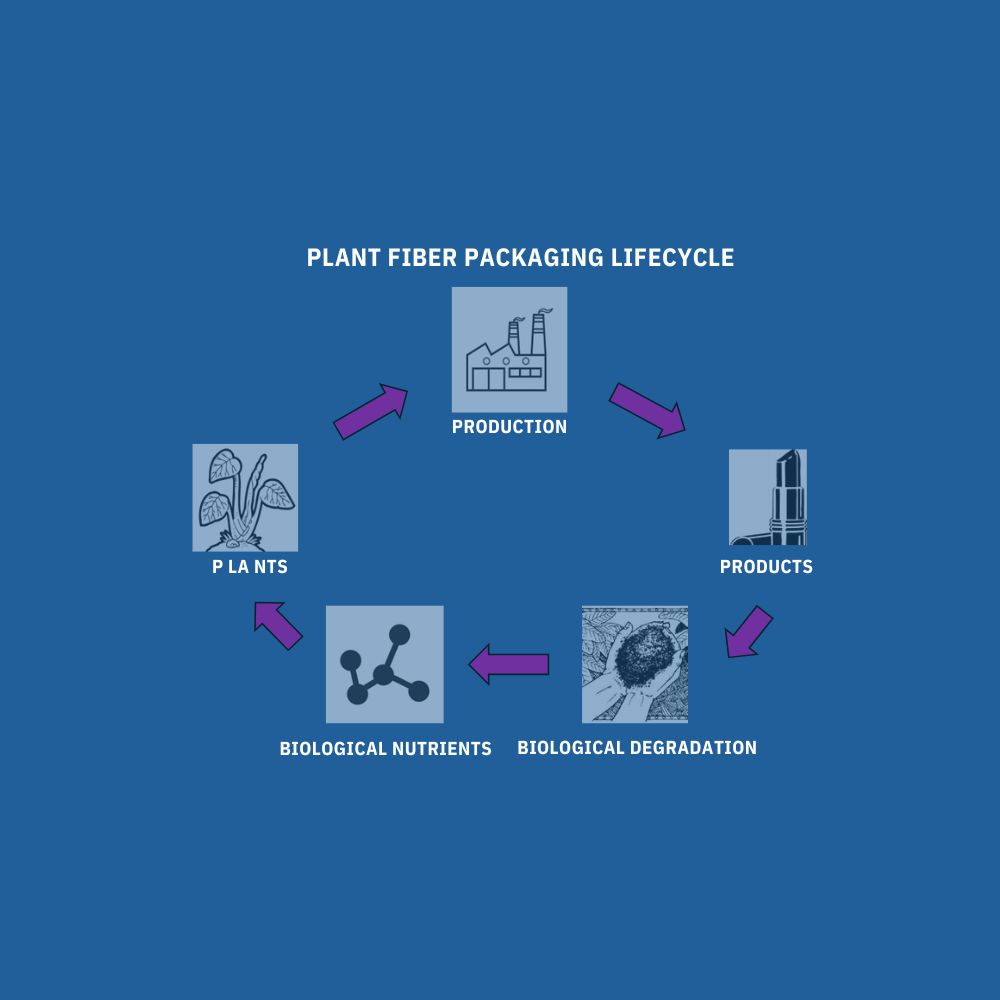
Plant Fiber Packaging Lifecyle
The process of biodegradable plant fiber packaging decomposition starts with a plant and ends with the nutrients to support new plant growth and health.